Tenant & Leasing · 5 min read · Published 17/11/2026
Renting a Shoplot in Malaysia: Deposits, Utilities and Renovation Costs
A practical move-in budget for shoplot tenants, covering payments to secure the premises, fit-out work and cash needed before opening.
By InnerProp
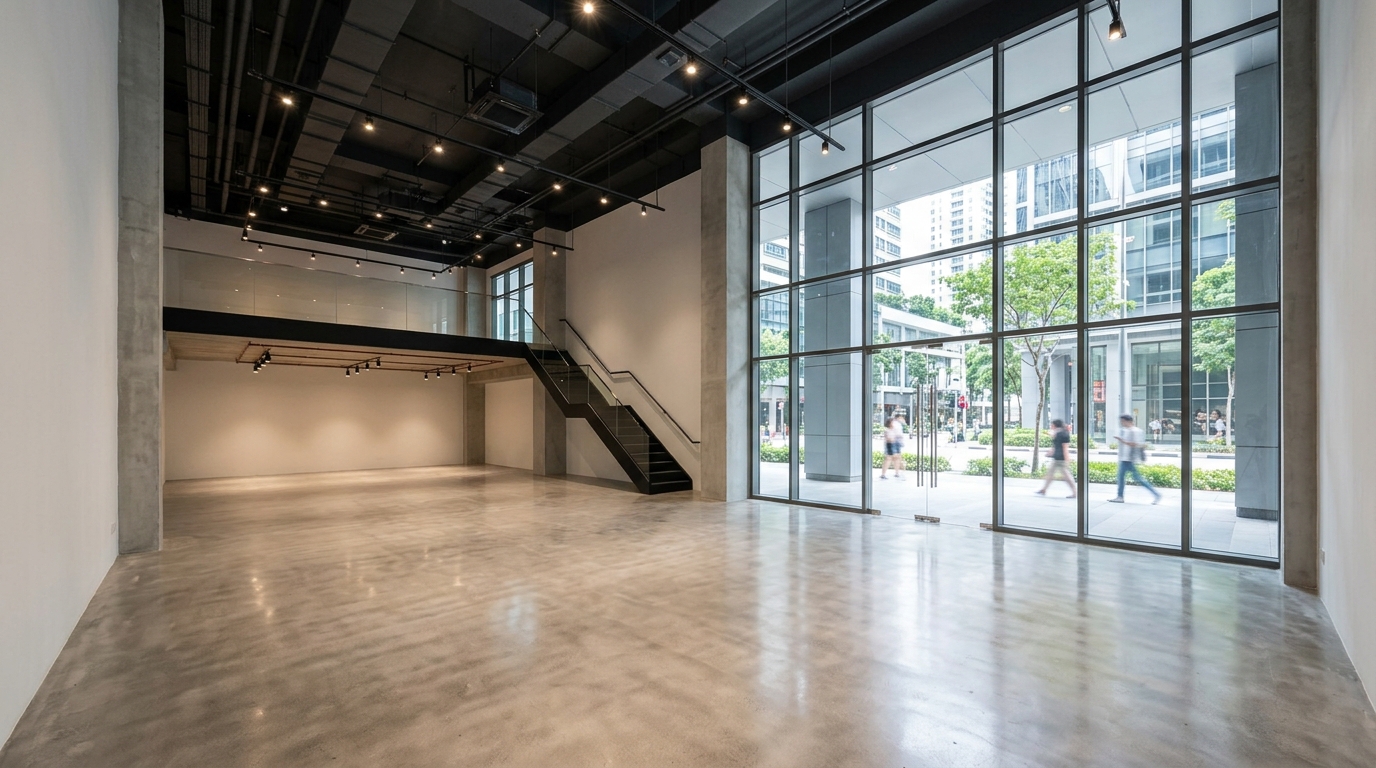
Renting a shoplot in Malaysia requires a budget that reaches beyond monthly rent. A business may pay deposits and advance rent before it can begin renovations, then wait for services, approvals and installation before opening to customers.
The useful question is how much cash the premises will need from the first payment to a functioning business. Separate refundable deposits, one-off expenses and recurring costs so a seemingly affordable rent does not create an opening-day cash shortage.
Confirm what is being rented
Establish whether the offer covers the ground floor, an upper floor or the whole building. Check the usable area, shared entrance, toilets, rear access, parking and any included equipment. An advertisement's total built-up area may include space that is not equally useful to the business.
The Rampai Business Park ground-floor shop listing is a live example of a shop marketed for rent. Its public details can start the enquiry, but the final premises description and current terms should be confirmed before an offer.
Describe your intended activity accurately. Retail, food preparation, a clinic and an office have different operational requirements. Ask the relevant authority and professional advisers what checks apply at the actual premises.
Itemise deposits and advance rent
Request a written schedule of rental security, utility security, renovation deposits and any other requested amount. These terms are negotiated or provider-specific; avoid assuming one fixed package applies to every shoplot.
Advance rent should be allocated to a stated period. Security deposits should have a stated purpose, deduction process and refund timetable. An initial booking payment needs clear terms explaining how it is held and when it is refundable or forfeitable.
The factory deposit guide explains the distinction between recoverable cash and expenses. The same budgeting distinction is useful for commercial premises, although the actual shoplot terms must be checked separately.
Put utility accounts and connections on the schedule
Clarify who holds the electricity and water accounts, who applies for any change and who pays deposits or connection charges. Ask whether existing arrears or disconnected services could affect readiness, and resolve responsibility in writing.
Check the installation against the business requirement. Air-conditioning, kitchen equipment, refrigeration and specialist machinery can change the load considerably. An existing account or meter does not establish that the premises can support the intended equipment.
Confirm telecommunications directly with the provider if reliable internet is essential. Include installation lead times and temporary arrangements where needed. Do not assume that a service available next door is already connected to your unit.
Build the renovation scope before agreeing dates
Prepare a brief covering layout, partitions, flooring, electrical work, plumbing, air-conditioning, signage and any process-specific equipment. Obtain comparable quotations based on the same scope rather than comparing totals with different inclusions.
Ask contractors to identify exclusions, provisional items and work that depends on inspections or approvals. A low initial quotation may leave substantial work unpriced. Allow contingency for defects discovered after access, while avoiding an arbitrary assumption that every building needs major repairs.
The TTDI Jaya first-floor office listing provides a live example of space described as renovated. Such a description does not establish that the existing fit-out suits a new tenant or that every item is included and operational.
Check approval and building conditions
Landlord consent does not replace any applicable local authority or building-management approval. Confirm the position for your intended activity, signage, alterations, external equipment and any use of common areas.
For food-related operations, investigate extraction routes, drainage, waste handling and other relevant requirements before designing the fit-out. Do not infer permission from a previous restaurant tenant. Have suitable advisers identify the actual requirements for the premises and activity.
Agree who provides documents, submits applications and pays fees. Where approval is essential, discuss an appropriately drafted condition before making an unconditional commitment.
Negotiate the renovation period carefully
Specify when renovation access starts, when the tenancy begins and when rent becomes payable. State which other charges remain payable during any rent-free period. Confirm what happens if the landlord's work or access is delayed.
A nominal renovation period can be consumed by approvals, utility work or contractor mobilisation. Create a realistic programme with dependencies rather than treating key collection as the same as readiness to renovate.
For illustration only, a tenant paying RM6,000 monthly would need RM12,000 for two months of overlap with an existing location, before considering deposits or fit-out. That hypothetical amount shows why timing belongs in the budget as well as in the agreement.
Include opening costs and working capital
Set aside funds for moving, cleaning, stock, furniture, point-of-sale systems, professional advice and business-specific setup. Keep payroll and operating reserves separate from the property budget.
Request current advice on applicable taxes and stamping rather than copying figures from an old agreement. Use the Tenancy Agreement Fees & Stamp Duty Calculator for a planning estimate, then ask for professional fee quotations and clarify which party pays which amount. A total labelled “documentation” should be broken down so the business understands the charges.
Prepare a monthly occupancy forecast after opening, including rent, utilities, maintenance, service charges and any other recurring obligations. The first payment is only the start of the commitment.
Plan reinstatement before installing anything
Record the handover condition and included items. Agree what may remain at expiry and what must be removed, including signs, partitions, wiring or kitchen installations. Obtain written approval for alterations and preserve the correspondence.
A fit-out that works well for the business may still carry an exit cost. Include that obligation when deciding how much to spend and how long the premises need to remain commercially useful.
Make the budget match the business
A clear shoplot budget protects opening cash and makes negotiations more focused. This is general property guidance; obtain legal, tax and technical advice for the specific tenancy.
Explore Victor's InnerProp portfolio and enquire with your activity, preferred floor, location, opening date and total setup budget so the shortlist reflects the full cost of occupation.