Industrial & Warehouse · 5 min read · Published 17/11/2026
How to Choose a Warehouse Location in Klang Valley
A route-based approach to comparing warehouse locations across Klang Valley, with checks for vehicle access, staff, resilience and future growth.
By InnerProp
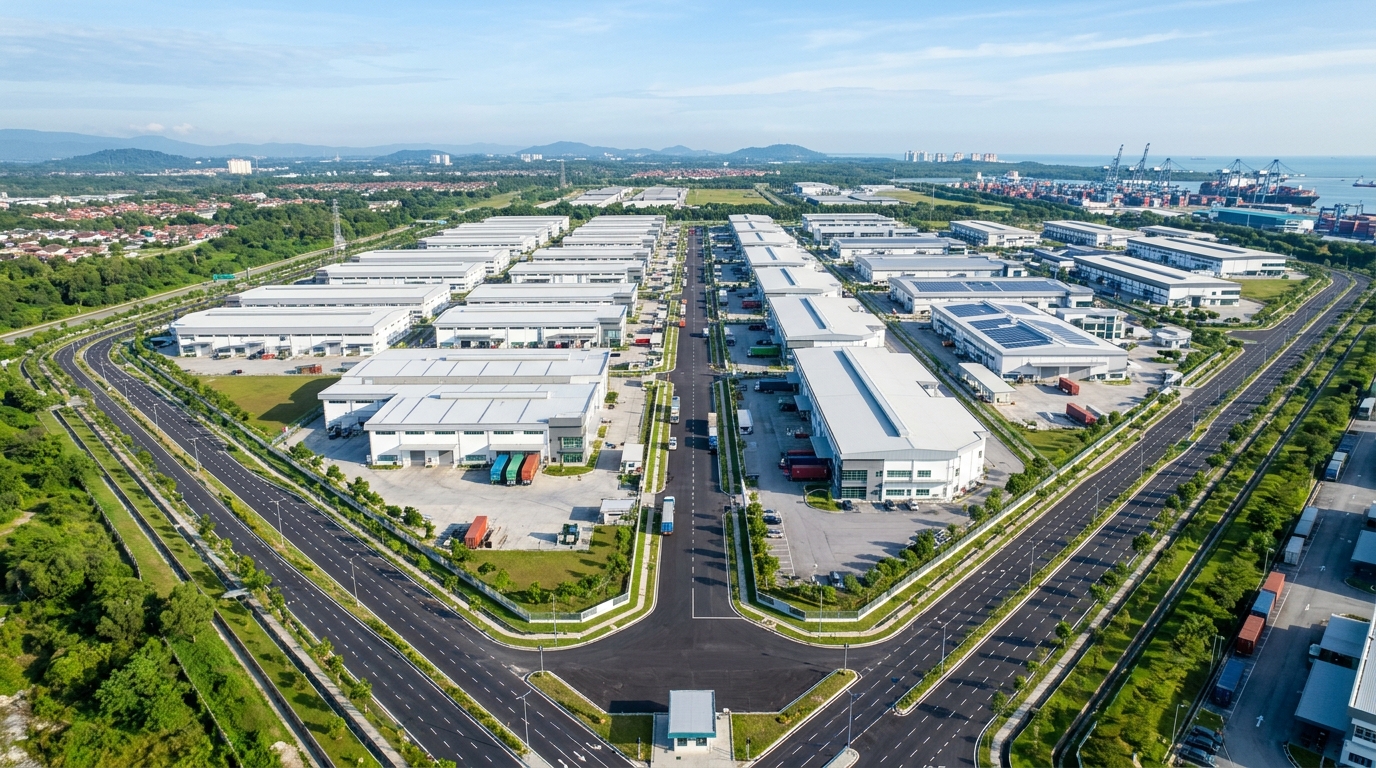
A warehouse location should improve the movement of goods, people and information. The cheapest building on a property search can become expensive if drivers spend extra time on the road, staff struggle to reach work or deliveries regularly miss customer windows.
In Klang Valley, evaluate locations against your actual supply chain. A warehouse serving local online orders has different priorities from one handling frequent port movements or feeding a regional production network. Start with routes and service commitments, then shortlist buildings.
Map the operation before choosing an area
List your main suppliers, customer clusters, transport depots and delivery partners. Record trip frequency, vehicle type, shipment size and required delivery times. Separate inbound movements from outbound distribution and returns.
Use recent dispatch records if available. A location that appears central on a map may serve few of the journeys that matter most. Weight frequent or time-sensitive trips more heavily than occasional destinations.
For a new business, create realistic scenarios and label them as assumptions. Revisit them when order patterns become clearer rather than signing a long commitment around an untested idea of where customers will be.
Compare routes at operating times
Check journeys during the hours vehicles will actually travel. Include tolls, expected queues, access roads and the final approach to the property. A highway entrance nearby does not guarantee a straightforward route for every vehicle.
Ask your transporter to assess restrictions, turning movements, bridge or overhead clearance and the approach to the loading area. Confirm any applicable vehicle access rules with the relevant parties. Do not assume a route suitable for a passenger car works for a container trailer.
A hypothetical operation making twenty delivery trips daily may be more sensitive to a small increase in travel time than a bulk-storage business with a few weekly movements. Convert the difference into driver time, vehicle cost and service reliability before comparing rents.
Think in corridors, then inspect individual sites
Businesses may compare Klang and Port Klang for port-related movements, Shah Alam for industrial and distribution requirements, or Subang and Puchong for access to particular customer networks. These are starting points for analysis, rather than universal rankings.
Each area contains very different roads, developments and building types. Assess the actual address and route instead of assuming every property within one township shares the same access advantages.
The Shah Alam U10 logistics warehouse listing provides an example of a facility with publicly stated loading infrastructure. Use that detail to ask better questions about vehicle flow and journey suitability, rather than accepting marketing descriptions of connectivity as measured travel-time evidence.
Check the final kilometre and the yard
Location quality can fall apart at the last turn. Inspect gate width, street parking, narrow corners, roadside activity and queues outside neighbouring premises. Determine whether large vehicles can enter, unload and leave safely during normal operations.
Inside the site, check the apron, staging area and loading arrangement. Establish whether the yard is exclusive or shared and whether its use is restricted. Confirm waiting arrangements for early arrivals so they do not block public roads or emergency access.
The HICOM warehouse with an office component is another live industrial candidate for comparison. Its mix of warehouse and office space may suit some operations, but access, usable area and conditions still need to be checked for the individual business.
Include staff and service providers
Map where your workforce comes from and consider practical transport options, shift times, parking and nearby services. A site that saves freight costs may create recruitment or attendance difficulties if staff access is poor.
Check reliable telecommunications, courier coverage, equipment servicing and emergency support. Confirm services directly with providers where they are essential. Availability somewhere in the district does not establish readiness at the exact premises.
If offices and warehouse functions share a site, distinguish staff access from delivery traffic. A layout that forces pedestrians through an active loading area needs professional attention before occupation.
Assess flood and disruption exposure
Ask about past water ingress, surrounding drainage, road levels and access interruptions. Consult available official information and appropriate professionals, and seek insurance terms before finalising the location.
The Department of Irrigation and Drainage's Public Infobanjir portal provides rainfall, water-level and warning information. It is one source for investigation, not certification that an individual warehouse is free of flood risk.
Consider business continuity as well as physical damage. An inaccessible road can stop dispatch even when stock remains dry. Discuss backup routes, alternative carriers and the amount of disruption the business can tolerate.
Calculate total logistics and occupation cost
Compare rent together with transport, tolls, labour, utilities, handling efficiency, insurance and fit-out. Include deposits and relocation cash separately. Use the same period and operating assumptions for every location.
For illustration, a saving of RM5,000 per month in rent would be eliminated by RM5,000 in additional monthly transport and staffing costs. That comparison excludes other effects, but it helps prevent rent from dominating the decision.
Check expansion options without assuming adjacent premises will become available. If growth requires relocation within a short period, include the likely disruption and reinstatement cost in the present decision.
Use a shortlist with clear decision rules
Set essential requirements first: permitted activity, vehicle access, usable space, services and readiness date. Reject candidates that fail those requirements before scoring preferences such as presentation or proximity to a preferred township.
Use the Selangor factory rental checklist for the property and agreement checks that follow. Record evidence, assumptions and unresolved matters so the decision can be reviewed by operations, finance and management.
Turn the route map into an enquiry
The right location is the one that supports dependable service at a sustainable total cost. This guide is general operational guidance; obtain relevant legal, technical and insurance advice for the chosen site.
Explore Victor's InnerProp portfolio and enquire with your delivery destinations, vehicle sizes, usable warehouse area and target start date. That information makes a location shortlist much more useful than a rent budget alone.